how to sell property privately
How to Sell Property Privately in Australia: A Comprehensive 2024 Guide
Introduction
Selling your home privately can look attractive. You keep more of the sale price, control the process, and move on your timetable. The flip side is real. You will be the marketer, receptionist, tour guide, negotiator, and file clerk. Australian property law is state based, buyer expectations are high, and a single disclosure miss can derail a deal or expose you to claims.
I have helped hundreds of owners weigh this up across Australia. Private house sales can work for straightforward properties where time and process discipline are available. If your listing sits stale, if the legal pack is thin, or if you underprice during a hot week of enquiry, your cost of selling privately can exceed any commission you hoped to save. This guide shows you the exact private sale process, the legal must haves by state, a realistic budget, and how to avoid the common traps. I also show you where an experienced agency like George & Sons can change your risk profile and your net result, even if you plan to start as For Sale By Owner.
Stats at a glance 2026:
- Conveyancing for sellers typically ranges from $900 to $2,200 depending on state and complexity.
- Professional photography and floorplan often sits between $300 and $800.
- Staging can range from $1,500 to $5,000 for a standard 3 bed home for 4-6 weeks.
- Agent commissions vary by state and sale price. Independent comparison sites place common ranges at roughly 1.6-3.0 percent plus GST. Your suburb and property type drive the true figure.
Use this as a working playbook. If you want an expert sanity check on pricing, marketing or negotiation at any point, the George & Sons team is on call. Reach out via contact us.
Key Takeaways
- Private sale is legal nationwide, but disclosure rules, contract prep and compliance vary by state. Know your state rules before you advertise.
- Budget for professional photography, floorplan, signage, listing access via an approved service, conveyancing, and staging if the property needs lift.
- The biggest private sale risks are mispricing in week one, limited buyer reach, and weak negotiation on terms not just price.
- Have a complete, compliant contract pack ready in states where it is mandatory before marketing. In other states, prepare early to avoid delays when you find a buyer.
- If enquiry is low after 14-21 days or you receive only conditional offers, escalate. A measured agent intervention can reset strategy without losing momentum.
- George & Sons can step in at any stage. Strategy reset, qualified buyer reach, and contract discipline protect your net outcome.
Summary Table
| Factor | Private Sale | Agent Assisted |
|---|---|---|
| Typical upfront costs | $1,500-$7,500 marketing and legal | $0-$5,000 vendor paid marketing plus commission |
| Commission | None | Often 1.6-3.0 percent plus GST depending on market |
| Time investment by seller | Very high | Low to moderate |
| Market reach | Depends on your listing service and effort | Broad, established buyer channels and databases |
| Pricing and negotiation expertise | DIY | Professional, data informed |
| Legal pack preparation | DIY with conveyancer | Managed, coordinated with conveyancer |
| Risk of underquoting or misleading claims | You are responsible under ACL | Agent is regulated and responsible for compliance |
| Likelihood of multiple offers | Lower on average due to reach | Higher probability due to marketing scale |
The private sale process at a glance
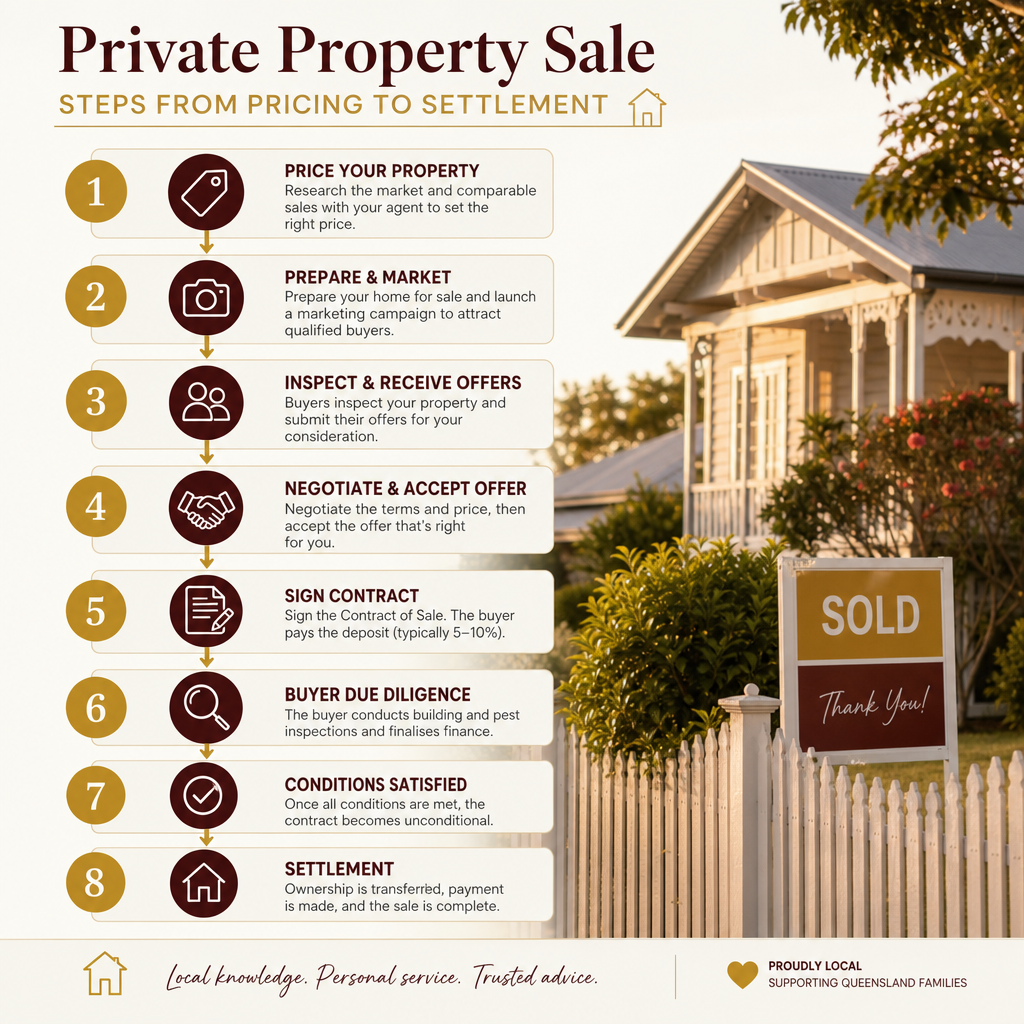
A private sale in Australia is legal in every state and territory. You are not required to use a licensed agent. In practice you still need to work with a licensed conveyancer or solicitor and, in some states, have a contract pack ready before marketing. You also need meaningful reach into active buyers. Most major portals restrict direct access for private sellers, so you will usually list via an authorised service provider that is a licensed agency. That service puts your listing on the big sites, while you handle enquiries and negotiations.
The core steps look like this:
- Decide timing and pricing approach.
- Prepare compliance, repairs and presentation.
- Engage a conveyancer or solicitor to assemble the required documents and contract.
- Create marketing assets. Photography, floorplan, copy, signboard.
- List through an approved private sale platform, advertise locally and on social channels, and run inspections.
- Qualify buyers and manage offers.
- Negotiate price and terms. Finance, building and pest, settlement date, inclusions.
- Exchange contracts and manage conditions.
- Settle, hand over keys, and complete utilities and rates adjustments.
I will unpack each step with the Australian specific detail you actually need.
The real cost of selling privately
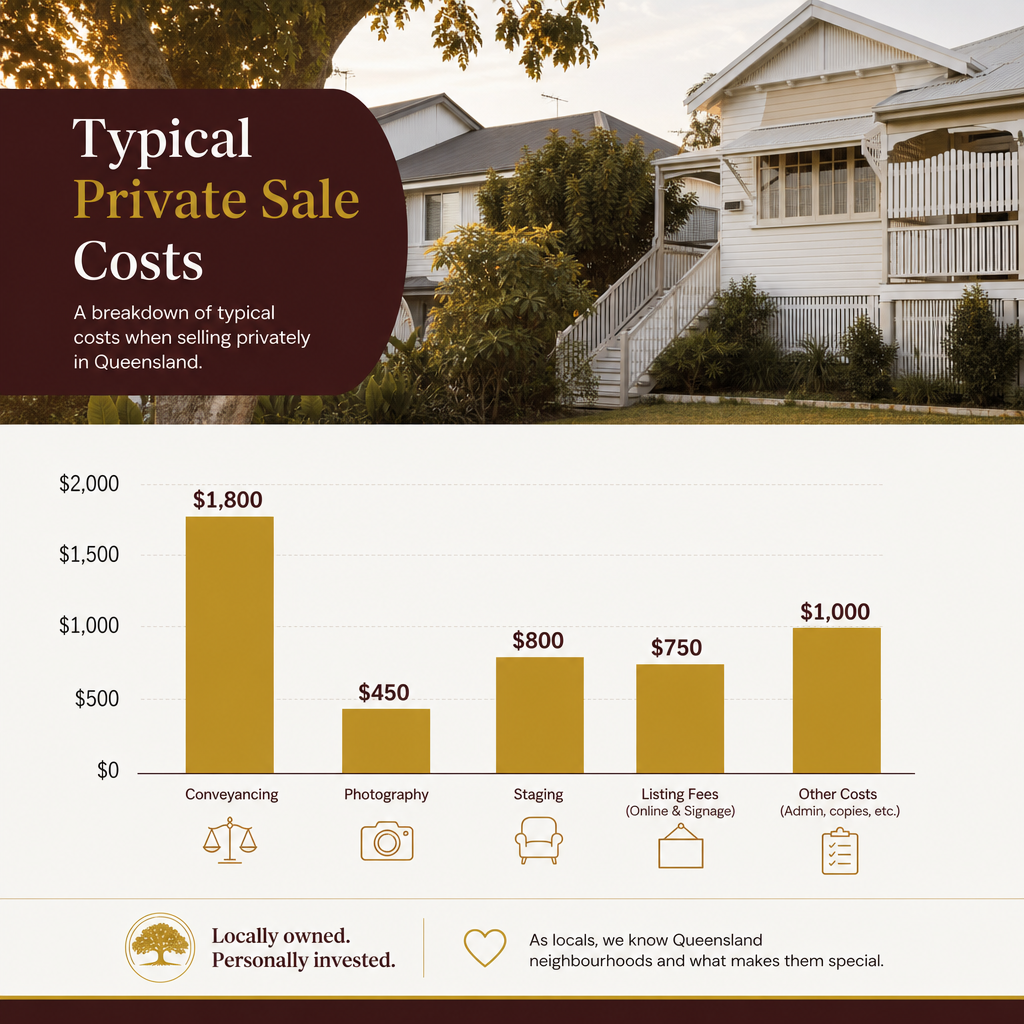
You can save the commission line. You cannot skip the core costs that drive enquiry and protect you legally. A practical budget for a metro 3 bed house at $900,000 looks like this:
- Conveyancer or solicitor: $1,200-$2,000 including disbursements. Title search, statutory certificates, contract preparation or vendor statement depending on state.
- Photography and floorplan: $300-$800 for 10-16 images plus a measured plan. Drone or twilight can add $150-$300.
- Listing access via a private sale service: commonly $300-$1,200 for a base package. Some include a signboard and brochure templates. Check duration and change fees.
- Signboard and brochure printing: $150-$600 depending on size and materials.
- Styling or partial staging: $1,500-$5,000 for 4-6 weeks, higher for premium homes.
- Building and pest report: optional in most states, required in the ACT. If you commission it pre market, budget $500-$800. It can speed up a deal and reduce renegotiation risk.
- Compliance: smoke alarms, pool barrier, RCDs in WA, plus minor fixes. Budget $300-$1,000 for typical remedial items.
On that $900,000 example, a lean but effective private sale budget is often $3,000-$6,000. The right spend on assets that raise perceived value usually pays back in the first weekend of enquiry. If you later decide to appoint an agent, none of that spend is wasted.
Commission reference point: Independent comparison platforms routinely publish state based ranges that sit between 1.6-3.0 percent plus GST, with regional markets often higher. The right question is not fee alone. Net result after fees is what pays your next move.
Legal requirements by state and territory
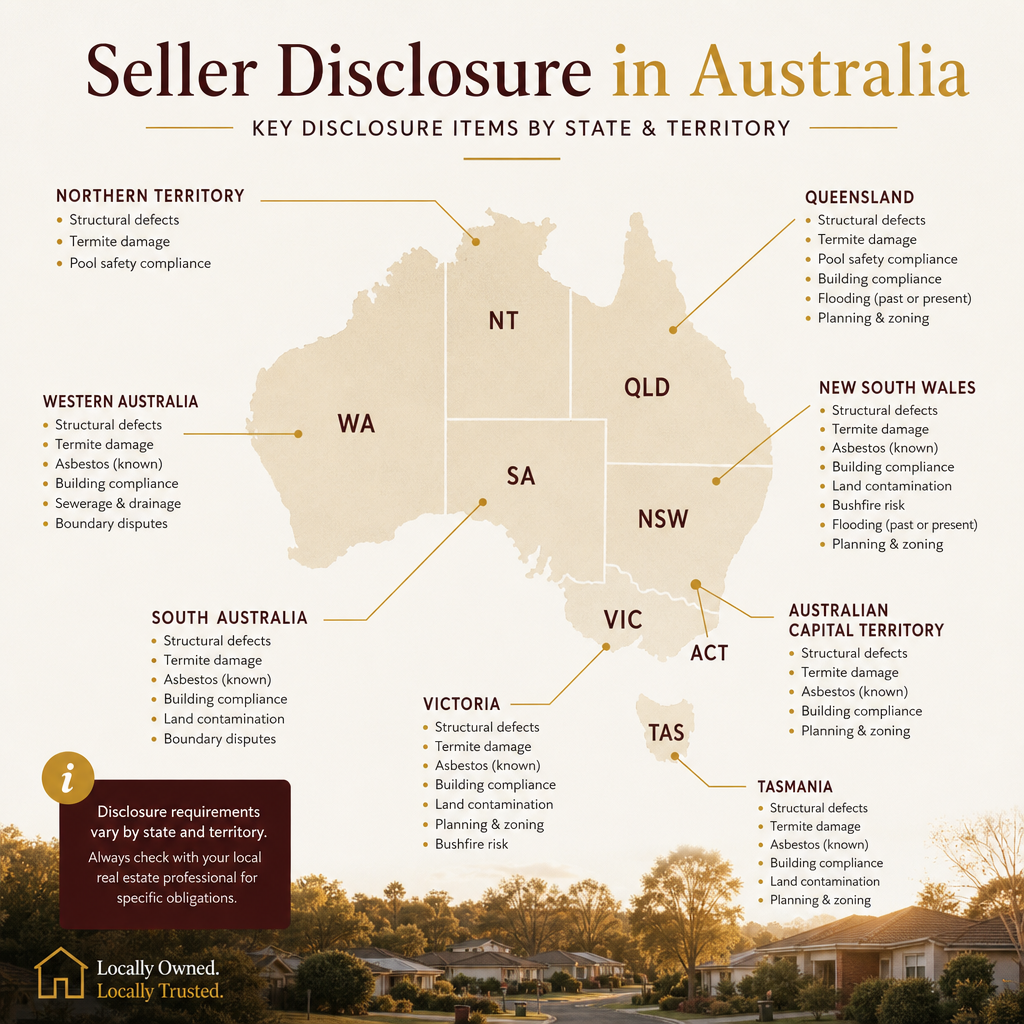
Australian property law is state based. Several states require a complete contract pack before you advertise. Others allow you to market while the contract is prepared. Disclosure rules also vary. Here is what actually matters for private sellers.
New South Wales
- You must have a contract for sale prepared before you offer the property for sale. That includes before you publish an ad. Your conveyancer or solicitor assembles title documents, a section 10.7 planning certificate, a sewer diagram, and any strata information if applicable.
- Smoke alarm compliance is mandatory. If selling a property with a pool, pool compliance certificate rules apply.
- Regulator: NSW Fair Trading.
Victoria
- A Section 32 Vendor Statement is mandatory and must be given to a prospective buyer before they sign a contract. It discloses title details, rates, building permits, and more.
- A Contract of Sale is prepared in parallel. Private sale cooling off rules apply in many cases.
- Regulator: Consumer Affairs Victoria.
Queensland
- Prepare a Contract of Sale through your solicitor or conveyancer. Disclose body corporate information for lots in a community titles scheme. Smoke alarm laws are strict and must be met prior to settlement. Pool safety rules require a certificate or relevant notice.
- Regulator: Queensland Government and Queensland Fire and Emergency Services for alarms.
South Australia
- A statutory Form 1 Vendor's Statement must be prepared and served on the purchaser. Cooling off begins when the buyer receives a complete Form 1. Typically prepared by your conveyancer.
- Regulator: Consumer and Business Services SA.
Western Australia
- There is no uniform vendor statement, but sellers have obligations under Australian Consumer Law. Western Australia mandates compliant smoke alarms and residual current devices before sale or rent.
- Contracts are commonly prepared using REIWA or Australian Standard forms by your settlement agent or solicitor.
- Regulator: Department of Mines, Industry Regulation and Safety.
Australian Capital Territory
- Mandatory presale disclosure is strict. Sellers must arrange specific reports and documents before marketing. These include title documents, a building and compliance report, an energy efficiency rating statement, and other prescribed certificates.
- Regulator: Access Canberra.
Tasmania
- Engage a conveyancer or lawyer to prepare the contract and statutory searches. Seller disclosure is less prescriptive than NSW, VIC or ACT, but accuracy and good faith matter. Pools and smoke alarms must comply.
- Regulator: Consumer, Building and Occupational Services Tasmania.
Northern Territory
- Contracts are prepared by your solicitor or conveyancer. Standard disclosures apply and sellers must not mislead buyers about property condition or approvals.
- Regulator: NT Government and NT Consumer Affairs.
Two points apply everywhere: do not make misleading representations, and get your legal pack in order early. If you are not sure what your state needs, a 15 minute call with a conveyancer saves weeks later.
If this already feels like a lot, we can coordinate the right conveyancer and have you compliant within days. Start that process via our real estate team or contact us.
Prepare the property for a private campaign
Presentation earns you bigger inspection numbers and a firmer negotiation position.
- Repairs and compliance: Fix obvious defects that will show on an inspection report. Dripping taps, cracked tiles, sticking doors, dead power points. Confirm smoke alarms, pool barriers, and any local electrical safety requirements.
- Declutter and clean: Space sells. Remove 30 percent of furniture. Clear benchtops. Deep clean grout, windows, and wardrobes.
- Minor updates with high ROI: Fresh paint in neutral tones. New cabinet handles. Replace old tapware. Re caulk bathrooms. New LED globes.
- Street appeal: Mulch garden beds, mow edges, pressure clean paths, new doormat and mailbox numbers.
- Staging: If the home is empty, staging helps buyers read scale and flow. Even partial styling in living and master can lift perceived value.
- Prelisting checks: If your property is strata, confirm levies, special levies, and by laws. If rural or acreage, collate bore, dam, easement and fencing details.
Pricing strategy that works for private sellers
Your first 7-14 days set your price narrative. Get this right.
- Use sold, not listed. Check recent sales within 1 km and plus or minus 10 percent of your expected value. Filter for land size and build type.
- Know your price band. Buyer search filters jump at round numbers. If your true value is near $900,000, a price guide of $880,000-$920,000 or an offers over $879,000 strategy will catch the $800,000-$900,000 filter and pull extra eyeballs. In NSW and VIC, be careful with underquoting rules if you decide to appoint an agent later.
- Pre test with three proof points. 1, a desktop valuation or RP Data estimate. 2, three very close comparable sales. 3, an agent appraisal even if you plan to sell privately. If two of three sit in the same band, that is your starting point.
- Avoid chasing the market. If you miss your band and buyer feedback is 3 percent below your list, adjust in week two. A small pivot early beats a big cut after 30 days.
If you want a frank second opinion from negotiators who do this daily, ask for a price sanity check from our real estate team. No obligation.
Marketing plan for FSBO that actually generates buyers
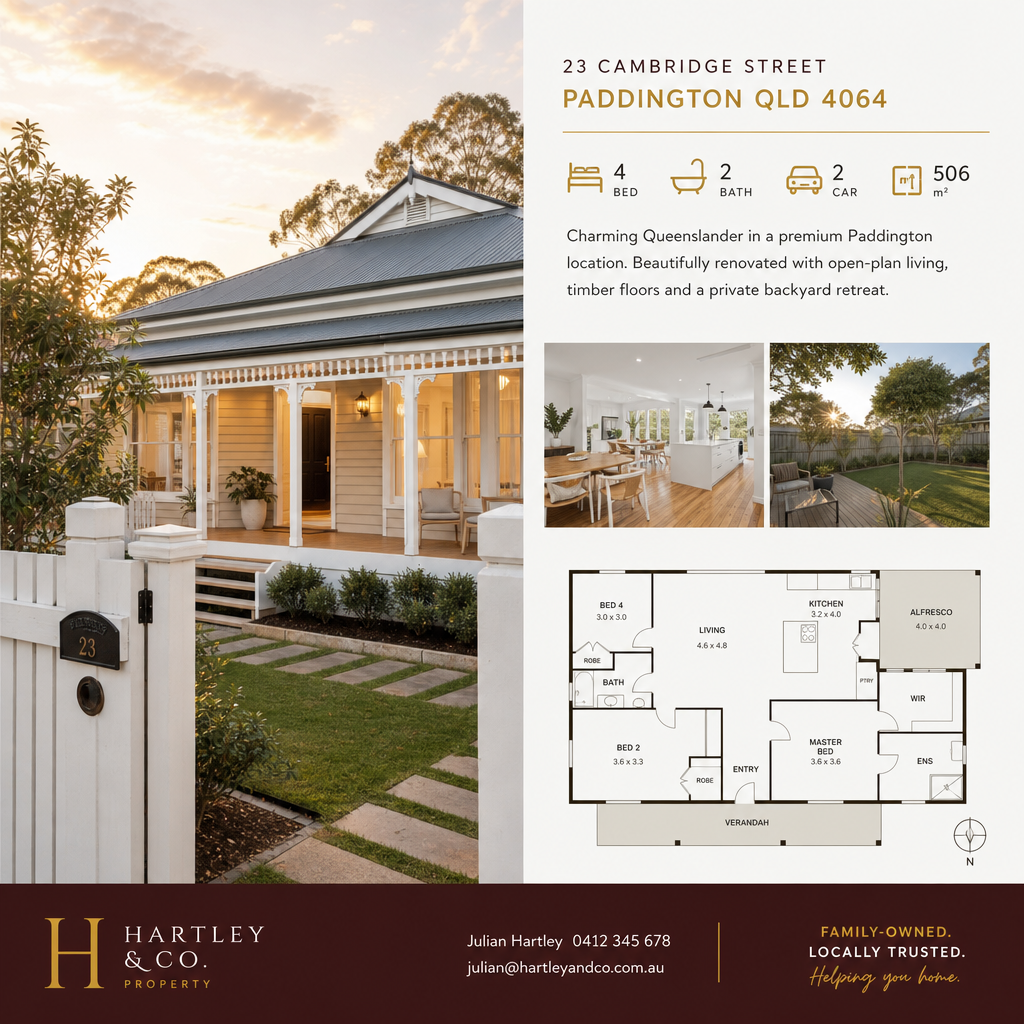
You are competing with professional campaigns. Close the gap.
- Photography and floorplan: Non negotiable. Frame with natural light, decluttered spaces, and straight verticals. A measured plan reduces time wasting inspections.
- Copywriting that sells and complies: Focus on outcomes buyers want. Space for a growing family, a sunny north facing courtyard, a 5 minute walk to the station. Avoid absolute claims like flood proof or soundproof unless you can substantiate. Australian Consumer Law applies to you too.
- Portal exposure: The dominant portals require listings via licensed agents or authorised services. Choose a reputable private sale service that puts you on the big sites, allows edits without heavy fees, and provides enquiry forwarding in real time. Confirm how they verify buyer identities and how long the listing runs.
- Social and local reach: Short video highlight reels perform well. Add subtitles. Post in local community groups where allowed. Letterbox drop 200 closest homes with a simple A5 flyer and a QR code to your listing.
- Signboard and street capture: A clean, well placed board still works. Neighbours bring buyers.
- Open homes and private inspections: Pick two inspection windows on Saturday and one midweek. Maximise overlap to create social proof. Keep valuables locked away. Have a sign in sheet with name, mobile, and email.
- Follow up discipline: Call every attendee within 24 hours. Ask for price feedback and buying timeframe. Buyers who tell you they are waiting for a preapproval are your likely week two offers.
Handling enquiries and qualifying buyers
Volume without structure burns time.
- First response: A simple SMS and email with brochure link and inspection times within minutes of an enquiry. Speed wins.
- Qualify politely: Ask if they are house hunting already, if they have sold, and if finance is preapproved. Genuine buyers will answer.
- Prioritise hot buyers: Preapproved buyers without a home to sell first. Cash is rare. Confirm proof before you bank on it.
- Protect privacy: Never overshare. Do not disclose other offers or vendor bottom lines. Invite best and final where competition is genuine.
If responses spike beyond what you can handle, we can run a buyer management sprint. You keep control and we manage the pipeline. Start a short engagement through contact us.
Negotiation tactics for private sellers
Your goal is the best combination of price and terms. Structure drives net outcome.
- Price is not the only lever. Shorter settlement reduces holding costs. A bigger deposit signals commitment. Fewer conditions increase certainty.
- Control the variables. Set a deadline for offers after your first big open. If you have two interested buyers, invite both to submit their best and final by a set time.
- Anticipate building and pest risk. If timber pest is likely, consider commissioning your own report and quoting a realistic remedy. This reduces dramatic renegotiations later.
- Use silence and pacing. Do not rush to fill pauses. Ask buyers to put numbers in writing. Verbal offers are not offers.
- Keep records. File notes and email confirmations protect you if disputes arise.
Legal guardrails matter. Misleading advertising and false representations breach Australian Consumer Law. Avoid statements about approvals, boundaries, or unpermitted works unless supported by documents.
Contracts, conditions and exchange
Several states require a completed contract before you advertise. Even where not required, get your conveyancer preparing early.
- Contract pack contents vary by state. At minimum expect title search, plan, rates and water information, and any strata documents. NSW requires section 10.7 planning and a sewer diagram. Victoria requires a Section 32 Vendor Statement. ACT requires prescribed reports including an energy efficiency rating.
- Offer handling. Ask buyers to submit a signed contract with their price, deposit, and conditions, or a written heads of agreement your solicitor can convert to contract terms.
- Common conditions. Finance approval within 10-21 days. Building and pest inspection within 7-14 days. Subject to sale of the buyer's property. You can counter any of these.
- Exchange. In NSW and ACT, exchange happens when both parties sign identical contracts and date them. Deposit is usually paid on exchange. In other states, signing and deposit processes are similar, handled by your conveyancer or solicitor.
- Cooling off. Rules are state specific. For example, NSW private sales usually have a 5 business day cooling off for the buyer unless waived. Victoria has a cooling off regime with exceptions. South Australia cooling off links to Form 1 service. Know your state before you agree to timing.
Document control is where many private sales wobble. A good conveyancer avoids surprises, but deal flow management still matters. If you want us to quarterback exchange while you remain the seller, we can step in for this discrete stage.
Settlement, handover and aftercare
- Pre settlement inspection. Allow the buyer to inspect in the 3 days before settlement to confirm the property is in the agreed condition and inclusions remain.
- Utilities and rates. Your conveyancer will adjust council rates, water and strata levies on settlement. You notify electricity, gas, internet and insurance of settlement date.
- Key release. Only release keys when your solicitor or conveyancer confirms settlement has occurred and cleared.
- Tax and records. Keep your settlement statement and contract for tax. If the property was an investment, talk to an accountant about capital gains implications. If it is your main residence, CGT is generally exempt.
If you are buying next, a conversation with a finance specialist early protects your sequence. Book a quick call with our finance contacts to map cash flow and settlement timing.
When a professional agent is worth it
You do not need an agent to be legal. You do need the right capability to be effective. The following are clear triggers to get help.
- Complex properties. Acreage, development sites, unique architecture. These need curated buyer pools and specialised negotiation.
- Tenanted or holiday let properties. Coordinating access, notice, and presentation is harder. You also face tenancy disclosure and notice requirements.
- High enquiry with low conversion. If you are getting views without offers, your messaging or pricing needs a reset.
- Time poor sellers. Open homes, follow up, and negotiation take hours daily in weeks one and two.
- Stalled campaigns. If engagement dips after 21 days, do not bleed momentum. A structured relaunch can restore urgency.
Case study 1: Private listing to premium outcome in 21 days
A Brisbane family listed their post war home privately. Strong location, unrenovated kitchen, and a big yard. After two weeks they had 23 enquiries, 11 groups through, and one verbal offer at $1,040,000 subject to sale. They called me for a second opinion on strategy, not to take over.
Intervention:
- We reset the price guide to a sharper bracket based on three fresh comparable sales.
- We shot a new hero image and added a floorplan overlay to the main listing image. We rewrote the copy to focus on land size and school catchment.
- We set a best and final deadline for the coming Saturday and called every attendee with the update.
Outcome:
- 19 more groups through in 5 days.
- Three written offers. Highest was $1,095,000 with a 14 day finance clause and a 42 day settlement.
- The family accepted that and banked $55,000 more than the original verbal while tightening conditions. Their net, even after a short engagement fee, was higher than staying the course alone.
Case study 2: Developer owner to repeat success by doing the work that matters
Back in January 2021 I met a developer owner of a Beenleigh apartment complex. He was sceptical and invited me to have a go. Freshly built apartments are often straightforward, but competition was fierce. I made sure I knew everything about the complex, the body corporate, and I took a genuine interest in buyers' needs. I walked people through, answered specifics, and followed up with purpose. That owner is now a friend. We sold the first apartment, then the second, and five years on we have sold 12 apartments in the complex and are still going.
The point for private sellers is simple. Depth of product knowledge, consistent follow up, and buyer focused conversations move deals across the line. If you have the time and temperament, you can replicate elements of this. If you want that discipline without the time burden, bring in help.
Client testimonial
"We started privately to save money. After two weeks we were drowning in questions and tyre kickers. Alex reframed our price, tightened our messaging, and ran a clean best and final. We sold above our stretch number and settled on our dates without drama. Worth every cent."
Owner, inner north Brisbane
If you want that outcome profile for your sale, start the conversation through contact us.
Risk management checklist for private sellers
- Contract pack ready before advertising where required. In other states, have your conveyancer engaged early.
- Verify smoke alarms, pool barriers, and any state specific electrical safety items.
- Copy checked for accuracy. No unverified claims about approvals, boundaries or flood.
- Enquiry response templates ready. SMS and email.
- Offer form or contract template ready to send.
- Buyer identification and proof of funds approach agreed.
- Clear plan for best and final if two buyers engage.
- Timetable with decision points. If no written offers by day 14, review price and marketing. If no acceptable offers by day 21, consider an agent assisted reset.
Private sale timeline example
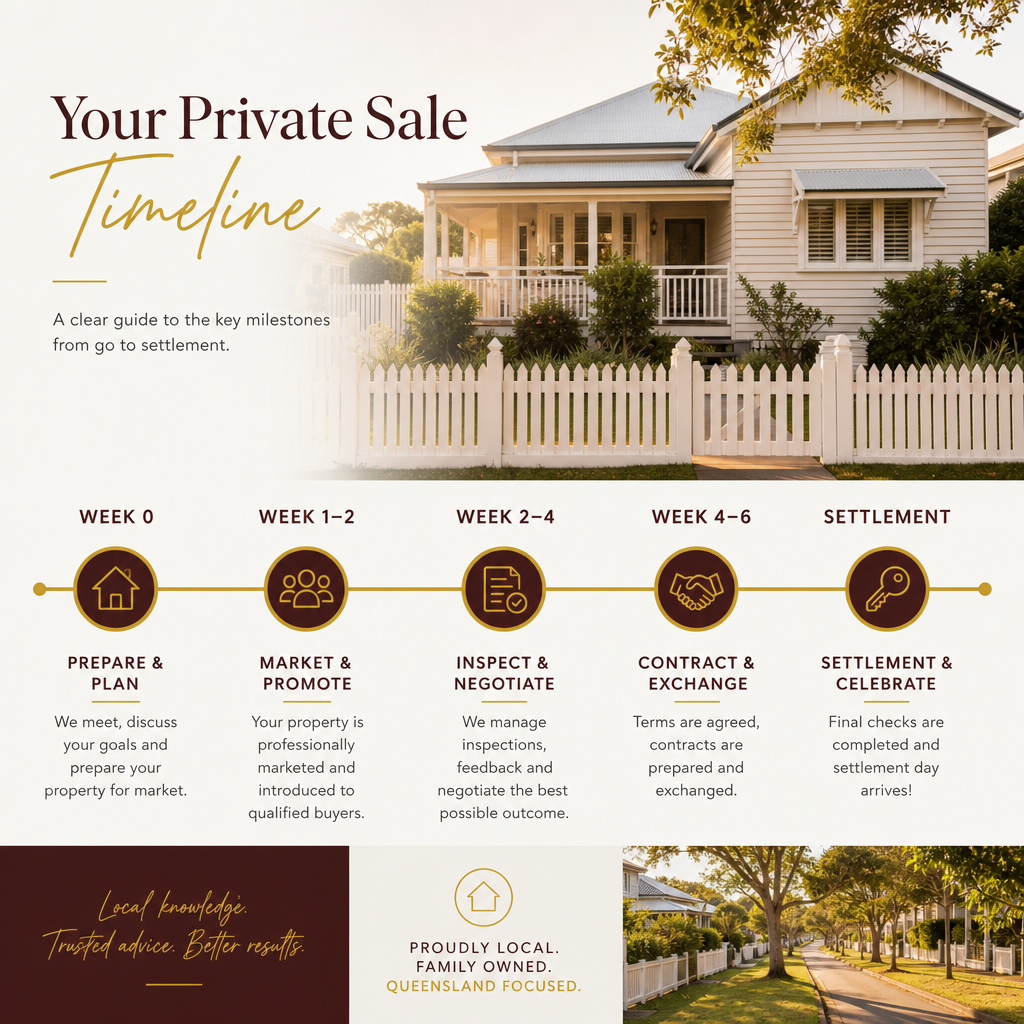
- Week 0. Engage conveyancer, commission photography and floorplan, prepare copy and signboard. Repairs and styling.
- Week 1. List, run first open home, follow up all attendees.
- Week 2. Second open. Invite offers. Adjust price guide if feedback indicates.
- Week 3. Best and final if competition exists. Otherwise, negotiate with top buyer and tighten conditions.
- Exchange. Sign and date. Deposit paid.
- Settlement. Typically 30-60 days depending on buyer finance and your plans.
Throughout, keep notes and stay disciplined. If you want the structure without the strain, George & Sons can run this playbook with you, not over you. Reach out via our real estate team.
References
- NSW Fair Trading. Selling a property in NSW. https://www.nsw.gov.au/housing-and-construction/buying-and-selling-property/selling-a-property/using-an-agent-or-selling-privately
- Consumer Affairs Victoria. Sale of property and Section 32 Vendor Statement. https://www.consumer.vic.gov.au/housing/buying-and-selling-property/selling-property
- Queensland Government. Preparing to sell residential property. https://www.qld.gov.au/housing/buying-owning-home/selling
- Queensland Fire and Emergency Services. Smoke alarm requirements for domestic dwellings. https://www.qfes.qld.gov.au/smokealarms
- Consumer and Business Services South Australia. Form 1 Vendor's Statement. https://www.cbs.sa.gov.au/industry-resources/conveyancers/form-1-vendor-statement
- WA Department of Mines, Industry Regulation and Safety. Buying and selling property. https://www.commerce.wa.gov.au/consumer-protection/buying-and-selling-property
- WA Department of Mines, Industry Regulation and Safety. Smoke alarms and RCD requirements. https://www.commerce.wa.gov.au/consumer-protection/smoke-alarms-and-rcds
- Access Canberra. Sale of Residential Property and seller disclosure. https://www.accesscanberra.act.gov.au/selling-a-residential-property
- Consumer, Building and Occupational Services Tasmania. Buying and selling property guidance. https://cbos.tas.gov.au/topics/housing/buying-and-selling-property
- NT Government. Buying or selling a home. https://nt.gov.au/property/home-buyers-owners-and-sellers/buying-or-selling-a-home
- Australian Competition and Consumer Commission. Advertising and selling guide, avoiding misleading claims. https://www.accc.gov.au/business/advertising-and-marketing/advertising-and-selling-guide
- CoreLogic Australia. Monthly Housing Chart Pack. https://www.corelogic.com.au/research/monthly-housing-chart-pack
- LocalAgentFinder. Real estate agent fees and commissions by state. https://www.localagentfinder.com.au/blog/real-estate-agent-fees-commissions
- realestate.com.au. Sold property prices and auction results. https://www.realestate.com.au/sold
FAQ_SCHEMA_JSON
Get tailored guidance
Send us your question and we will reply within one business day.
Send us the article topic, suburb, or property goal you want help with and we will reply within one business day.
Send my questionFAQ
Is it legal to sell my house privately in Australia?
Yes. It is legal nationwide to sell residential property without an agent. You must still comply with your state's disclosure and contract rules, and you should engage a licensed conveyancer or solicitor to prepare or review documents.
Do I need a contract before I advertise?
It depends on your state. NSW, VIC and ACT require specific documents before advertising. NSW requires a complete contract, VIC requires a Section 32 Vendor Statement, and ACT has prescribed presale disclosure. In QLD, SA, WA, TAS and NT you can usually advertise while your solicitor prepares the contract, but earlier is safer.
Can I list on major property portals as a private seller?
Most major portals require listings to be placed by a licensed agent or an authorised service. Private sellers typically use reputable For Sale By Owner services that are licensed and can publish your listing, while you manage enquiries and negotiations.
What does it cost to sell privately?
Budget for conveyancing or a solicitor, photography and floorplan, a listing package via an authorised service, signage, and presentation or staging. For a typical metro home, realistic budgets often land between $3,000 and $6,000 excluding any optional upgrades.
How do I handle offers and negotiation?
Ask buyers to submit offers in writing with price, deposit, conditions and settlement date. Compare on total value, not just price. Use deadlines to concentrate interest. Your conveyancer or solicitor can help draft counter terms. If two or more buyers are active, a best and final process creates clarity and momentum.
What are common legal risks in a private sale?
Misleading statements in ads or conversations can breach Australian Consumer Law. Failing to provide required disclosures in your state can delay or unwind a sale. Manage smoke alarm and pool compliance. Use a conveyancer to assemble the correct documents.
How long does a private sale usually take?
Markets vary. A disciplined private campaign can secure a deal in 2-4 weeks if priced correctly and well presented. Unique or complex properties, soft market conditions, or restricted buyer reach can lengthen the timeline.
When should I consider appointing an agent?
If you have low enquiry after 14-21 days, if your time is limited, if your property is complex, or if your offers are consistently conditional and weak, appointing an experienced agent can improve competition, structure and net outcome. You can retain control and set clear performance expectations.
Margy George
Property and finance guidance from the George & Sons team.
Keep reading
property management fees Australia
Property Management Fees in Australia: A Comprehensive Guide for Landlords
19 min read
real estate market trends Australia
35 Australian Real Estate Market Statistics for 2026
20 min read
rent vesting strategy australia
Rent-Vesting in Australia: The Strategic Property Investor's Guide for 2026
18 min read
Ready for clarity?
Get a calm, practical plan for your next property move.
Buying, selling, finance, or renting - tell us what you are working on and we will come back with the most useful next step.
Tell us what you need help with.
Send a quick enquiry and the team will come back with a clear next step.
Request a callback