increasing rent without losing tenants
Increasing Rent Without Losing Tenants: A Guide for Australian Investors

Increasing rent without losing tenants requires three things: compliance with state law, evidence that the new rent reflects the market, and clear communication. Give the correct written notice, explain how you calculated the increase, consider the tenant's value, and avoid pushing the rent beyond what the property and local market support.
Rising ownership costs do not automatically justify any rent increase you choose. The amount must remain defensible, while the timing and notice must comply with the law in the property's state.
This guide explains how to increase rent in Australia, focusing on New South Wales, Victoria and Queensland. It also covers communication, upgrades, tenant objections and a practical portfolio review process.
Key takeaways
A successful rent review is not simply a notice sent at the earliest legal opportunity. Investors should confirm the tenancy rules, assess comparable properties, account for the existing tenant's value and communicate early. The best outcome is usually a sustainable rent with a reliable tenant, not the highest theoretical asking price.
- NSW and Victoria generally require at least 60 days' written notice, while Queensland generally requires at least two months' written notice for a general tenancy.
- Rent generally cannot be increased more than once in a 12-month period across these states, subject to the tenancy type and applicable legislation.
- There is no universal percentage that makes an increase fair. Comparable properties, condition, inclusions and local demand matter.
- A reliable tenant can be worth retaining at slightly below the maximum advertised rent.
- Maintenance is not an upgrade. Owners should not present overdue repairs as justification for charging more.
- Clear evidence and respectful communication reduce surprise, negotiation friction and vacancy risk.
Rent increase rules at a glance
The table below provides a practical comparison, not a substitute for legal advice. State rules can change, and fixed-term agreements may impose additional conditions. Confirm the current legislation, approved form and service requirements before issuing a notice, particularly when a lease is approaching renewal or has special rent-review clauses.
| State | General frequency rule | Minimum notice commonly required | Important qualification | Source |
|---|---|---|---|---|
| NSW | Generally no more than once every 12 months | At least 60 days in writing | Fixed-term conditions and the agreement's commencement date can affect the process | NSW Government |
| Victoria | Generally no more than once every 12 months | At least 60 days using the prescribed process | The notice must explain the calculation method, and fixed-term increases must be permitted by the agreement | Consumer Affairs Victoria |
| Queensland | Generally no more than once every 12 months for the property | At least two months for a general tenancy | The minimum period applies to the property, including where tenants change | Residential Tenancies Authority Queensland |
What makes a rent increase legal and fair?
A legal increase follows the state's rules for frequency, notice, form and service. A fair increase is also supported by comparable evidence and the property's actual condition. These are separate tests. An owner can satisfy the notice rules yet still face a dispute if the proposed rent appears excessive against the local market.
Start with the tenancy agreement. Check:
- whether the agreement is fixed or periodic
- the date of the last valid increase
- whether a fixed-term agreement permits an increase
- any stated amount, formula or review method
- the required notice form and service method
- when service is legally taken to have occurred.
Do not assume an email, text message or renewal discussion amounts to valid notice. Informal communication can prepare a tenant, but the formal notice still needs to meet the relevant state's requirements.
Fairness requires a broader commercial assessment. Review genuinely comparable properties in the same suburb or nearby competing area. Compare dwelling type, bedrooms, bathrooms, parking, condition, outdoor space, energy efficiency, furnishings and included services.
Advertised properties only reveal what owners are asking. They do not always reveal the rent ultimately agreed or how long the property remained vacant. A strong appraisal should therefore use more than a handful of optimistic listings.
What are the rent increase notice periods in NSW, Victoria and Queensland?
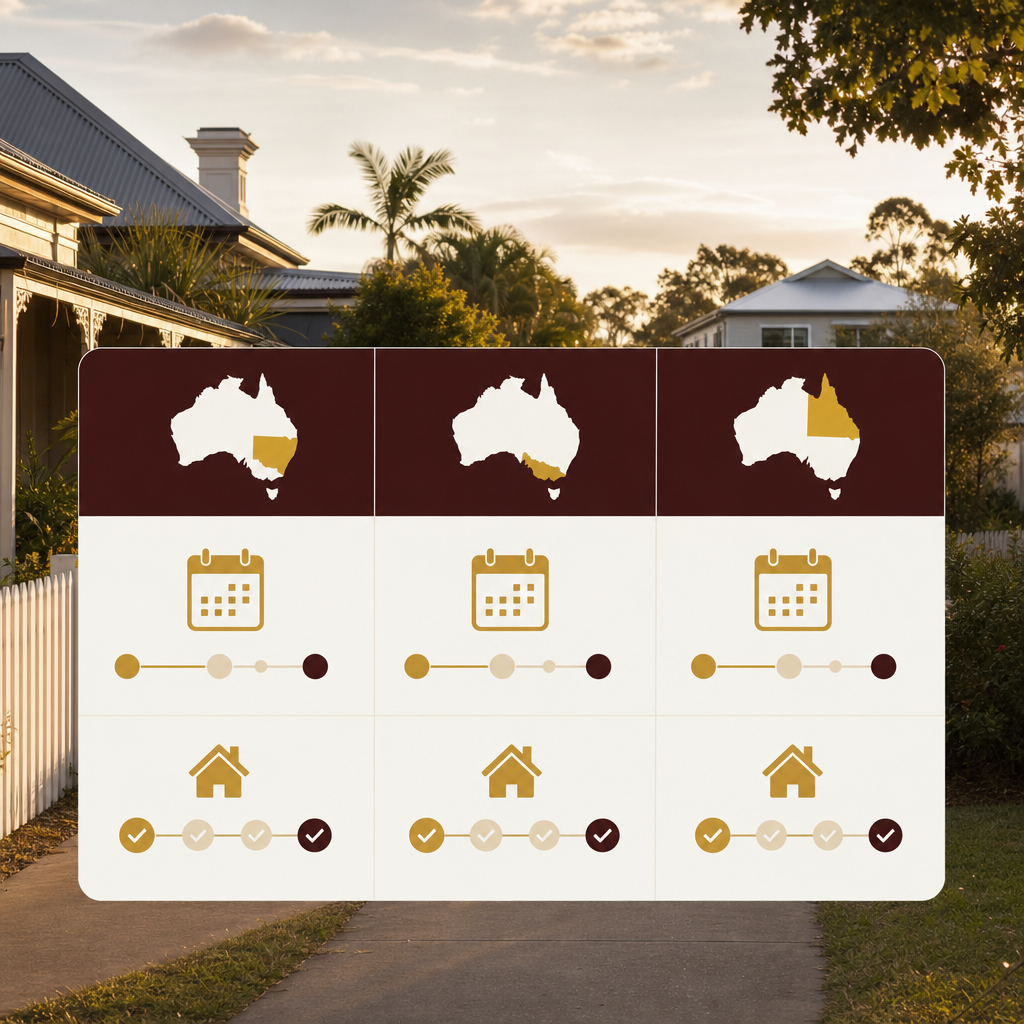
NSW and Victoria generally require at least 60 days' written notice. Queensland generally requires at least two months' notice for a general tenancy. These periods sound similar but should not be treated as interchangeable. Each state has different rules covering frequency, fixed terms, forms, calculation methods and service.
New South Wales
According to the NSW Government, rent generally cannot be increased more than once in a 12-month period. At least 60 days' written notice is required, and the notice must state the proposed rent and the date it takes effect.
For a fixed-term agreement, an increase must also comply with the agreement and current NSW rules. Owners should not rely on an old lease template or assume renewal creates an unrestricted opportunity to reset the rent.
A NSW tenant who believes an increase is excessive can apply to the NSW Civil and Administrative Tribunal. The NSW Government states that the application generally needs to be made within 30 days of receiving the notice. The tribunal may consider comparable rents, the property's condition, services, fittings and other relevant factors.
Victoria
Consumer Affairs Victoria states that rental providers generally cannot increase rent more than once every 12 months. Renters must receive at least 60 days' notice through the prescribed process.
The notice must identify the method used to calculate the increase. That requirement forces a more transparent assessment than simply declaring that ownership costs have risen. If an increase is proposed during a fixed term, the rental agreement must permit it.
A Victorian renter can ask Consumer Affairs Victoria to investigate a proposed increase if they believe it is excessive. Consumer Affairs Victoria states that this request must generally be made within 30 days after receiving the notice.
Queensland
The Residential Tenancies Authority Queensland states that rent increases are generally limited to once every 12 months and that this minimum period applies to the rental property, not merely to an individual tenancy. This prevents the frequency clock from automatically restarting when occupants change.
For a general tenancy, the tenant generally needs at least two months' written notice. An increase during a fixed term must also be permitted by the agreement and comply with the applicable timing rules.
Queensland's property-based frequency rule makes record keeping particularly important. A purchaser or newly appointed manager should establish the property's last increase date before issuing another notice. Guesswork creates avoidable compliance risk.
These rules provide the foundation for a fair rent increase in NSW, Victoria or Queensland. They do not determine the appropriate amount.
How should investors calculate a fair rent increase?
Calculate the proposed rent from current comparable evidence, then test it against the tenant's value and the cost of vacancy. Do not begin with the return you want and work backwards. The market does not price a property according to the owner's mortgage, land tax, insurance or personal cash-flow target.
Build a comparison set using properties that a tenant could realistically choose instead. A renovated apartment with secure parking should not be compared with an older apartment lacking parking simply because both have the same bedroom count.
For each comparable property, assess:
- location within the suburb
- building age and presentation
- internal floor plan and storage
- parking and transport access
- heating, cooling and energy features
- appliances and included services
- outdoor areas
- advertised condition
- listing history and apparent demand.
Next, assess the current tenant. Payment reliability, communication, cleanliness and reasonable care all have commercial value. A stable tenant reduces advertising, leasing administration, vacancy, cleaning and uncertainty.
Imagine a well-maintained property where the current rent sits below comparable listings. The tenant pays reliably and wants to stay. Raising the rent directly to the highest advertised figure may produce a larger weekly amount on paper, but it can also prompt the tenant to inspect alternatives. A measured increase supported by several relevant comparisons may protect more income over the full holding period.
Now consider a different property with dated flooring, unreliable cooling and unresolved maintenance. Nearby renovated properties command more. Matching their advertised rents without matching their condition is difficult to defend and likely to create resistance.
The correct question is not, "How much can I add?" It is, "What rent would an informed tenant reasonably pay for this specific property, and what retention risk comes with that amount?"
How do you communicate an increase without losing a good tenant?
Communicate before the formal notice becomes a surprise, but never substitute conversation for proper legal service. Explain that the rent has been reviewed against relevant properties, state the proposed amount and effective date clearly, and allow the tenant to respond. A factual explanation is stronger than blaming rates, interest costs or general inflation.
A sound communication sequence is:
- Review the lease, increase history and state requirements.
- Prepare comparable evidence and inspect the property's condition.
- Decide on a defensible proposed rent and negotiation range.
- Give the tenant a professional courtesy conversation where appropriate.
- Serve the correct formal notice using an approved method.
- Record service, correspondence and any agreement reached.
The formal notice should remain concise. A separate covering message can explain the reasoning in plain English. For example:
"We have reviewed the rent against comparable properties in the local area, taking account of the home's condition, parking and included features. The attached notice sets out the proposed rent and effective date. Please contact us if you would like to discuss the review or provide relevant information."
Avoid language suggesting the decision is punishment for a maintenance request, complaint or exercise of tenancy rights. Retaliatory conduct can create legal and reputational problems.
Do not manufacture urgency. A tenant should have the full statutory notice period to budget, seek advice or discuss alternatives. Pressure may secure short-term agreement, but it weakens trust.
If a tenant proposes a lower amount, assess it commercially. Compare the requested concession with likely vacancy, reletting work and the uncertainty of finding an equally suitable tenant. Negotiation is not failure. It is part of managing an income-producing asset.
Which property upgrades can support higher rent?
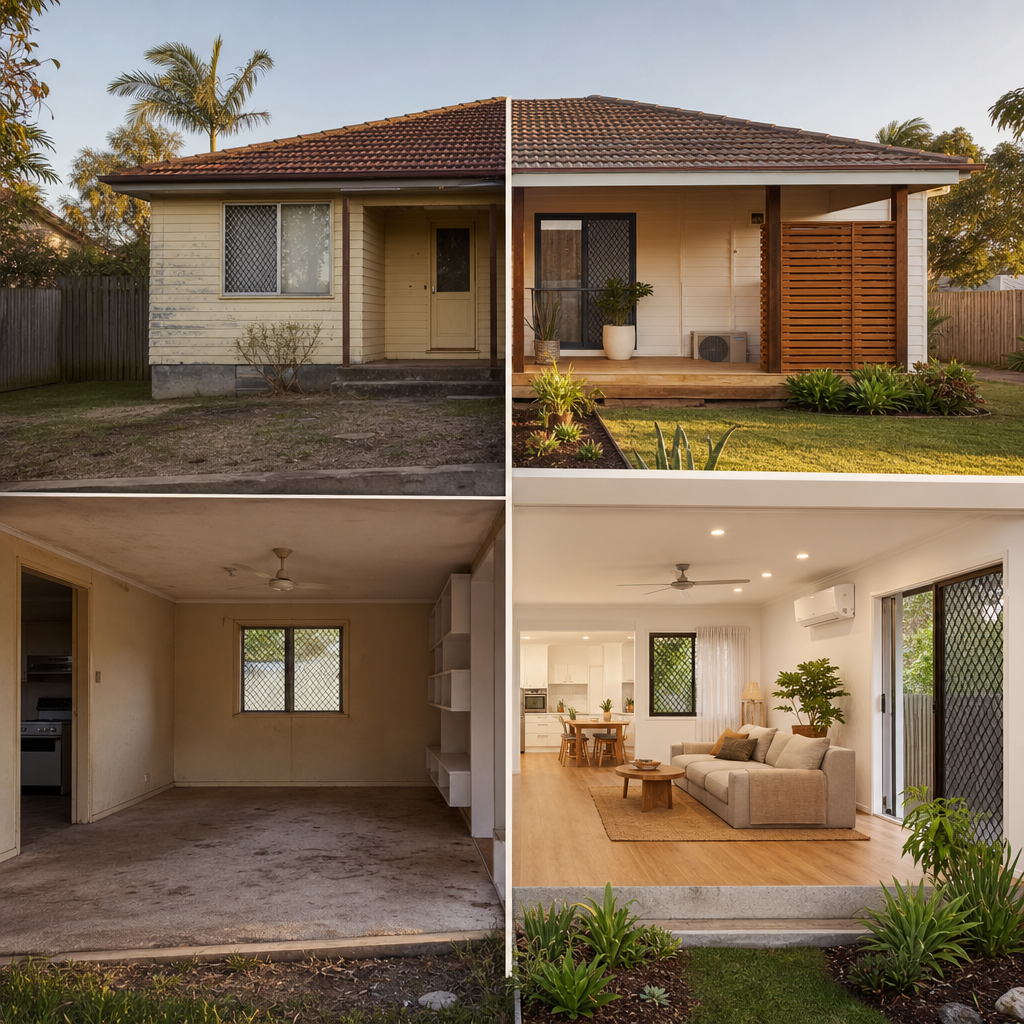
Upgrades support higher rent when tenants can see, use and value the improvement. Prioritise comfort, security, storage, energy performance and everyday function. Cosmetic spending that photographs well but does not improve the tenant's experience may help marketing, yet it will not necessarily support a meaningful increase.
Useful improvements can include:
- effective heating and cooling
- improved insulation or window coverings
- secure doors, windows and external lighting
- functional kitchens and bathrooms
- durable flooring and fresh internal presentation
- built-in storage
- improved outdoor usability
- reliable appliances
- internet-ready work areas where appropriate.
The right upgrade depends on the property and target tenant. Air conditioning may carry more weight in a warm Queensland suburb than a decorative feature wall. Secure parking may matter heavily near a transport or employment centre. Storage can distinguish an apartment where competing layouts feel cramped.
Separate improvements from maintenance. Repairing a failed hot-water service, fixing water ingress or restoring an appliance included with the property returns the home to the standard already promised. It is not a new benefit that automatically justifies additional rent.
Time improvements carefully. If intrusive work is needed, completing it between tenancies may be more practical. If the tenant remains in place, agree on access and minimise disruption. A tenant is less likely to value an upgrade if its installation is poorly managed.
Investors considering larger works should assess funding, holding costs and likely market demand before proceeding. George & Sons can help owners coordinate property strategy with finance considerations rather than treating the renovation and rental decisions separately.
What should you do if the tenant challenges the increase?
Treat a challenge as a request for evidence, not an act of disloyalty. Recheck the notice, service date, increase history and comparable properties. Then decide whether to maintain, revise or withdraw the proposal. If the matter proceeds to a regulator or tribunal, organised records will matter more than emotion or broad claims about the market.
First, identify the type of objection. The tenant may be saying:
- the notice is invalid
- the increase is too frequent
- the agreement does not permit it
- the proposed amount is excessive
- the property has unresolved defects
- the comparisons are not genuinely similar
- the new rent is unaffordable.
Affordability and market fairness are not identical, but both matter when considering retention. An increase can reflect the market and still cause a good tenant to leave. That is a commercial risk the owner must assess.
If there is a procedural error, correct it rather than arguing. Do not backdate a replacement notice or pressure the tenant to waive legal rights.
If the dispute concerns the amount, share relevant evidence. Remove poor comparisons and account for material differences. A property beside a noisy road may not match an otherwise similar home in a quieter position. A larger apartment without parking may appeal differently from a smaller one with secure parking.
Consider a hypothetical Queensland owner who proposes an increase based on newly renovated listings. The tenant points out that the subject property has older appliances and no cooling. The sensible response is to reassess the comparisons, not repeat that rents have risen. The owner could moderate the increase, complete an improvement or accept the risk of testing the open market later.
Seek state-specific advice where validity or tribunal action is in question. Property management guidance is valuable, but it does not replace legal advice on a contested matter.
A better portfolio process for rent reviews
Portfolio owners should use a repeatable review calendar rather than reacting when a lease is about to expire. Record each property's agreement type, last increase, condition, maintenance plan and next lawful review point. This creates enough time to collect evidence, approve upgrades and speak with tenants before formal deadlines become urgent.
A practical review file should contain:
- the current agreement and variations
- previous rent notices
- evidence of service
- the last increase date for the property
- inspection and maintenance records
- comparable rental evidence
- notes explaining adjustments between properties
- tenant correspondence
- the final decision and approval.
The owner should also distinguish three decisions that are often bundled together: whether to increase rent, whether to renew a fixed term, and whether to improve or sell the property. Each requires separate analysis.
An owner considering disposal may prioritise presentation, lease timing and purchaser appeal. An owner focused on long-term income may prioritise tenant retention and durable upgrades. Investors exploring acquisition, sale or portfolio positioning can discuss those choices with our real estate team.
Good records also protect continuity when a property changes manager or owner. This is particularly important in Queensland, where the minimum period between increases generally attaches to the property. A missing history should trigger investigation, not an assumption that an increase is available.
Trust is a portfolio asset, not a soft extra
My view is that owners often focus too narrowly on the notice itself. The deeper issue is confidence. Tenants, purchasers and owners accept difficult decisions more readily when the agent knows the property, explains the evidence and follows through consistently. That trust takes repeated work, but it can support relationships across an entire holding period.
I saw this principle clearly with a developer who owned apartments in a Beenleigh complex. When I first appraised the project in January 2021, he was sceptical that a smaller family agency could make a difference against established competitors.
I concentrated on knowing the complex, its body corporate and the apartments in detail. I also took the time to understand what each purchaser needed rather than relying only on the fact that the apartments were new, clean and spacious.
After the first sale, confidence grew. Five years later, we had sold 12 apartments in the complex and the relationship was still going strong. We also became good friends. Those figures come from our own George & Sons agency experience.
That was a sales assignment, not a rental increase case, but the lesson applies directly. Property decisions become easier when the agent can explain the asset properly and has earned credibility over time. A rent notice cannot create trust by itself. Consistent knowledge, communication and follow-through do.
This leads to a contrarian point. The maximum available rent is not always the best rent. If obtaining it requires losing a proven tenant, accepting vacancy risk and starting again with an unknown applicant, the apparent gain may not improve the owner's overall position.
Get a defensible rent review before serving notice
Before increasing rent, confirm what the agreement permits, when the next increase is lawful and what comparable properties genuinely support. George & Sons can review the property within the wider portfolio, identify improvement priorities and manage tenant communication. This gives investors a documented decision rather than a guess based on headline listings.
For help with rent reviews, leasing strategy or ongoing portfolio management, contact the George & Sons property experts. We will assess the property, tenancy and local evidence before recommending the next step.
References
- NSW Government, Rent increases
- Consumer Affairs Victoria, Rent increases
- Residential Tenancies Authority Queensland, Rent
FAQ_SCHEMA_JSON
Get tailored guidance
Send us your question and we will reply within one business day.
Send us the article topic, suburb, or property goal you want help with and we will reply within one business day.
Send my questionFAQ
How much can a landlord increase rent in Australia?
There is no single national cap applying to every residential rent increase. State law controls timing and notice, while market evidence helps determine whether the amount is excessive. Compare similar properties and consider condition, inclusions, location and tenant value.
Can rent be increased during a fixed-term lease?
It may be possible if the tenancy agreement permits the increase and all state requirements are met. Check the signed agreement and current regulator guidance before issuing notice.
What is the rental increase notice period?
NSW and Victoria generally require at least 60 days' written notice. Queensland generally requires at least two months' written notice for a general tenancy. Applicable forms, service methods and fixed-term rules must also be followed.
Can a tenant negotiate a proposed rent increase?
Yes. A tenant can provide comparable evidence, raise concerns about the property's condition or propose a different amount. The owner can assess that proposal against market rent, vacancy risk and the tenant's history.
Can a tenant challenge an excessive rent increase?
Yes. Tenants may have access to a state regulator, tribunal or formal assessment process. Strict application time frames can apply, so current state guidance should be checked promptly.
Should I renovate before increasing the rent?
Only where the work improves tenant value and makes commercial sense. Prioritise comfort, security, storage, function and energy performance. Required maintenance should be completed regardless of whether the rent changes.
Margy George
Property and finance guidance from the George & Sons team.
Keep reading
rent vesting strategy australia
Rent-Vesting in Australia: The Strategic Property Investor's Guide for 2026
18 min read
how to add value to your home before selling
How to Add Value to Your Home Before Selling: Renovation ROI Guide
15 min read
property management fees Australia
Property Management Fees in Australia: A Comprehensive Guide for Landlords
19 min read
Ready for clarity?
Get a calm, practical plan for your next property move.
Buying, selling, finance, or renting - tell us what you are working on and we will come back with the most useful next step.
Tell us what you need help with.
Send a quick enquiry and the team will come back with a clear next step.
Request a callback