how to add value to your home before selling
How to Add Value to Your Home Before Selling: Renovation ROI Guide

To add value before selling, fix visible defects first, improve presentation, and renovate only where an appraisal supports the cost. Fresh paint, clean flooring, simple landscaping, better lighting and careful staging usually carry less risk than structural work. Every project should be assessed against likely buyer demand, total cost, approval requirements and selling timeframe.
Renovating before a sale is not about building your ideal home. It is about removing buyer objections and making the property easier to compare favourably with competing listings.
This guide explains how to prioritise property valuation improvements, assess renovation ROI and avoid spending money that the local market may not return.
Key takeaways
The best pre-sale strategy starts with evidence, not a renovation wish list. Establish the property's current value, identify defects that could weaken buyer confidence, and compare each proposed improvement with local buyer expectations. Cosmetic work usually deserves priority because it is faster, easier to control and less exposed to approval or construction risk.
- Obtain a pre-sale appraisal before setting the renovation budget.
- Repair obvious faults before paying for decorative upgrades.
- Prioritise paint, cleaning, flooring, lighting and kerb appeal.
- Treat kitchens, bathrooms and structural changes as market-specific decisions.
- Include approvals, holding costs and selling delays in every ROI calculation.
- Stage rooms to demonstrate function rather than impose personal taste.
Summary table: which improvements deserve priority?
Use this table as a screening tool rather than a promise of financial return. Actual costs vary by property, location, trade availability, material choice and existing condition. The likely return also depends on comparable sales and buyer demand. Confirm the value ceiling through an appraisal, then obtain written quotes before approving work.
| Improvement | Cost exposure | Value confidence | Main risk | Practical approach |
|---|---|---|---|---|
| Cleaning and decluttering | Low | High for presentation | Removing too little | Complete before photography or inspections |
| Interior paint | Low to moderate | Usually strong | Poor preparation or polarising colours | Use consistent, neutral finishes |
| Minor repairs | Low to moderate | Strong objection removal | Hidden defects | Fix visible faults and investigate warning signs |
| Flooring refresh | Moderate | Property dependent | Replacing serviceable flooring unnecessarily | Clean, repair or refinish before replacing |
| Landscaping and facade work | Low to moderate | Strong first-impression benefit | Overcapitalising outdoors | Focus on access, maintenance and presentation |
| Kitchen or bathroom update | Moderate to high | Market dependent | Scope growth and trade delays | Refresh sound rooms before rebuilding them |
| Structural alteration | High | Uncertain without evidence | Approval, engineering and construction risk | Proceed only where comparable sales support it |
| Professional staging | Moderate | Depends on layout and campaign | Styling without fixing defects | Use staging to clarify room purpose and scale |
Step one: establish the property's value ceiling
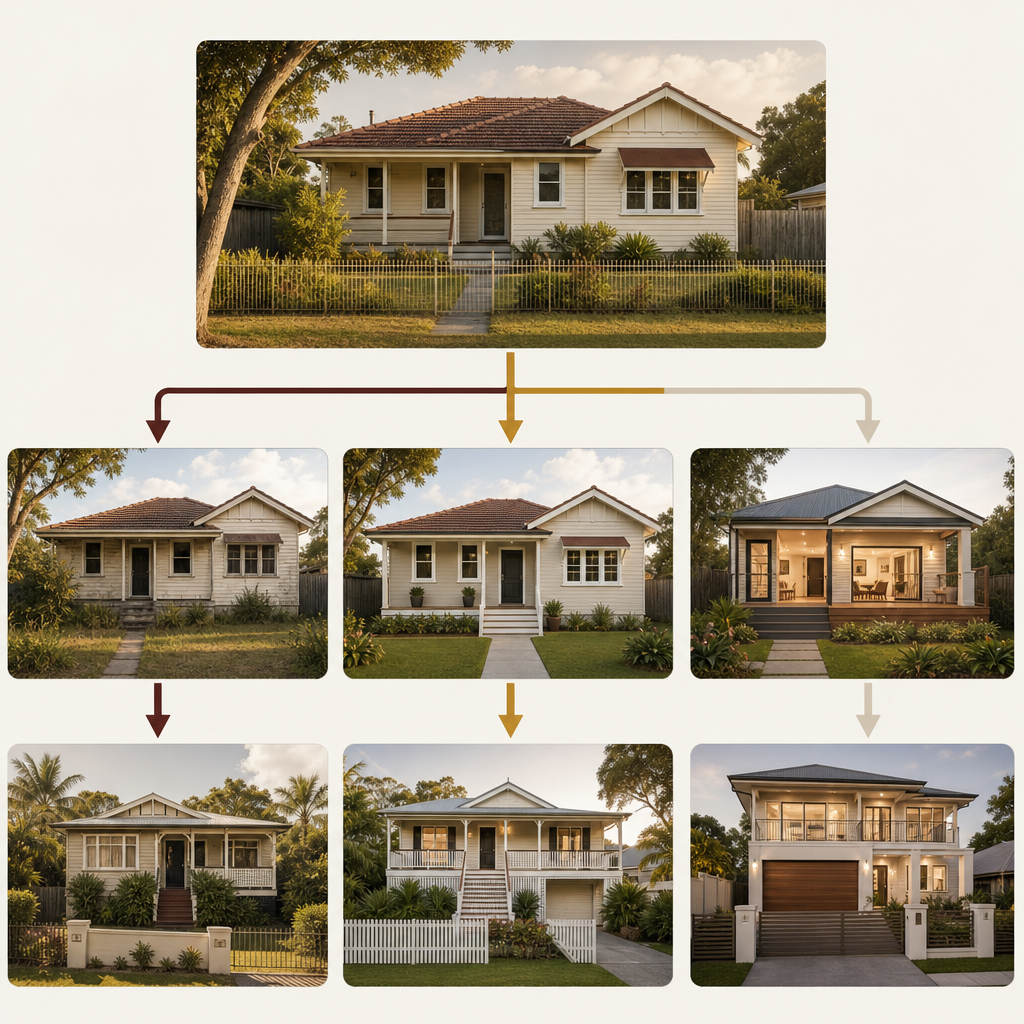
Start with a current appraisal and comparable local sales before choosing any work. The critical question is not whether an improvement looks better. It is whether target buyers are likely to pay enough for that improvement to cover its full cost, risk and delay. Without that evidence, renovation becomes speculation.
Ask the agent to compare your property with nearby sales in three conditions:
- Properties that need substantial work.
- Properties with sound cosmetic presentation.
- Fully renovated properties competing for the same buyers.
The gap between those groups indicates the possible value ceiling. It does not mean you can spend the entire gap. Renovation costs, selling delays, financing, disposal, approvals and contingency all reduce the potential benefit.
Use two practical metrics for every proposed project:
Net sale benefit = estimated sale-price uplift minus total project cost.
Return-to-cost score = estimated sale-price uplift divided by total project cost.
The estimated uplift should come from comparable sales and an agent's appraisal, not a generic online percentage. Total project cost should include labour, materials, design, approvals, temporary accommodation where relevant, finance and additional holding time.
A project can increase the sale price while still producing a poor financial result. That happens when the uplift is smaller than the total cost or when delays create additional holding expenses.
Before committing, request an appraisal through an experienced real estate team. If funding affects the scope or timing, assess your finance options before signing building contracts.
Separate defects from optional improvements
Defects and upgrades solve different problems. A leaking tap, damaged door, cracked tile or visibly failing paint finish can create doubt about maintenance. A premium benchtop is optional and may not influence every buyer.
Prepare separate lists for:
- Safety and compliance concerns.
- Active water, electrical or structural issues.
- Visible maintenance defects.
- Cosmetic presentation work.
- Optional layout or specification upgrades.
Address the first four categories before considering expensive additions. Buyers tend to interpret clusters of small defects as signs that larger problems may exist.
The cheapest ways to add value to a house
The cheapest ways to add value are usually cleaning, decluttering, paint preparation, minor repairs, improved lighting and simple garden maintenance. These jobs do not change the property's structure. Instead, they reduce visible neglect, improve photography and help buyers inspect the home without being distracted by unfinished maintenance or excessive personal belongings.
Deep cleaning and decluttering
Clean windows, tracks, kitchens, bathrooms, skirting boards, switches and outdoor entertaining areas. Remove excess furniture so paths are clear and rooms can be assessed properly.
Decluttering should not make the property look empty or impractical. Keep enough furniture to communicate room function and scale. Store collections, excess appliances, bulky exercise equipment and personal documents away from the property during the campaign.
Paint and surface preparation
Fresh paint can unify rooms and make existing flooring, cabinetry and window coverings look more deliberate. Preparation matters more than selecting an expensive paint range. Repair dents, sand rough patches, treat staining and correct the cause of moisture marks before repainting.
Do not simply cover mould or water damage. Buyers may notice the smell, staining or fresh isolated patch. More importantly, the underlying defect remains.
Choose a restrained palette that works with permanent elements such as tiles, benchtops and flooring. The objective is broad appeal, not a stark finish that makes every older surface look worse by comparison.
Hardware, window coverings and lighting
Replace broken handles, damaged switches, missing door stops and visibly inconsistent fittings. Clean usable blinds and curtains before replacing them. A complete but modest finish generally presents better than scattered premium fixtures.
Check whether lighting is adequate for photography and inspections. Use consistent lamp colours within connected spaces. Electrical installation and alterations must be completed by appropriately licensed tradespeople under applicable state or territory rules.
Floors
Start with professional cleaning, spot repairs or refinishing where the material allows. Replacement is justified when damage is extensive, odours persist or mismatched finishes divide an otherwise connected living area.
Do not install the cheapest available product without considering the property's position. Buyers comparing higher-specification homes may treat visibly weak flooring as an immediate replacement cost.
Improve kerb appeal and outdoor function
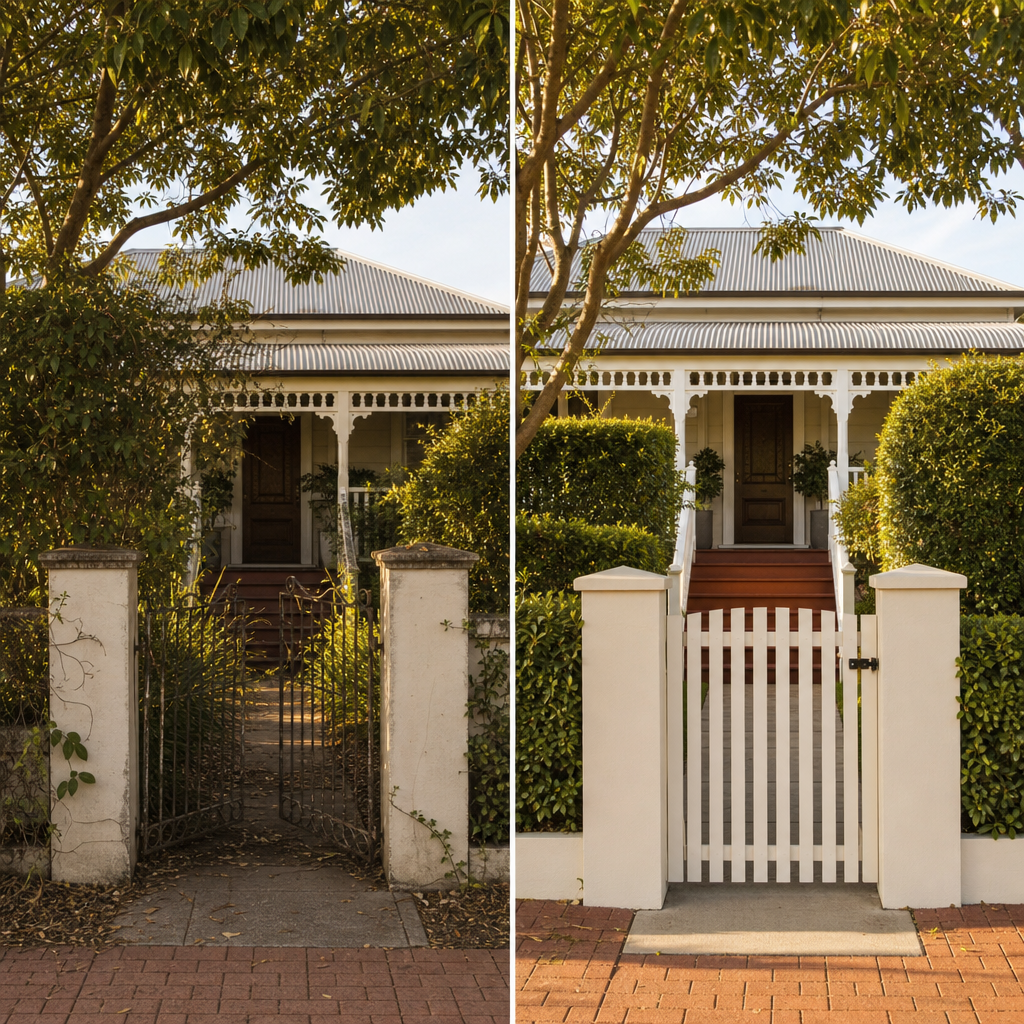
Kerb appeal, also commonly searched as curb appeal, affects expectations before buyers enter the property. Focus on a clear entrance, maintained vegetation, visible street numbers, clean paths and a sound front door. Outdoor spending should improve usability and maintenance confidence, not create elaborate features that buyers may see as ongoing work.
Begin at the street and walk towards the entrance as a buyer would. Look for blocked sightlines, unstable pavers, peeling finishes, overflowing garden beds and bins or hoses dominating the approach.
High-priority work can include:
- Pressure cleaning suitable hard surfaces.
- Trimming plants away from paths, windows and gutters.
- Removing dead growth and controlling obvious weeds.
- Repairing gates, latches, fences and letterboxes.
- Cleaning the front door and replacing defective hardware.
- Defining garden edges and applying suitable mulch.
- Making outdoor seating areas clean and accessible.
Avoid building a deck, pool, outdoor kitchen or major retaining structure solely because competitors mention outdoor living. These projects introduce design, approval, construction and maintenance questions. They need direct support from comparable local sales.
Drainage, retaining walls and large trees require particular care. Cosmetic work should never conceal movement, water flow problems or unsafe structures. Seek qualified advice where warning signs exist.
Kitchens, bathrooms, storage and home staging ROI
Kitchens and bathrooms influence buyer perception, but complete replacement is not automatically the best investment. If the layout works and major components remain serviceable, targeted updates can improve presentation with less risk. Storage and staging also add value when they demonstrate practical use without reducing space or hiding unresolved defects.
Refresh before rebuilding
For a sound kitchen, assess cabinet adjustment, damaged handles, sealant, splashback condition, lighting and appliance cleanliness before considering demolition. Painting cabinetry or replacing benchtops should only proceed when the existing structure can support a credible finish.
In bathrooms, repair leaks and failed sealant before cosmetic work. Waterproofing is not a surface decoration issue. Where work affects waterproofing, plumbing or electrical systems, use appropriately licensed practitioners and confirm applicable approval requirements.
A partial update can fail when new surfaces draw attention to old defects. For example, a premium vanity beside damaged tiles and corroded fittings may make the room feel inconsistent rather than renovated.
Add useful storage, not visual bulk
Storage is valuable when it solves an obvious functional problem. Consider internal wardrobe fit-outs, a defined linen area or better laundry organisation where these can be completed cleanly.
Freestanding units can make rooms appear smaller. Permanent cabinetry can also reduce flexibility if it is too deep or poorly positioned. Assess door swings, walkways and natural light before adding it.
Calculate home staging ROI properly
Home staging ROI should be measured against the complete campaign outcome, not an unsupported universal percentage. Ask whether staging will improve photography, clarify an awkward layout, support the target price position and reduce buyer uncertainty.
Staging is more likely to help when rooms are empty, furniture is badly scaled or the home's presentation does not match its likely buyer group. It cannot compensate for strong odours, active leaks, poor cleaning or visible maintenance failures.
Compare the staging fee and any extra moving or storage costs with the appraisal range for staged presentation. If the likely value effect is unclear, stage the most important living and sleeping areas rather than filling every space.
Structural changes require a higher evidence threshold
Structural renovations should only proceed before sale when the market evidence is strong and the approval pathway is clear. Removing walls, adding rooms or changing wet areas can create engineering, planning, building and certification obligations. The larger the scope, the greater the risk that delays or hidden conditions will weaken the return.
The National Construction Code sets minimum requirements for building work in Australia. The Australian Building Codes Board publishes the National Construction Code, while states and territories administer building regulation, licensing and approval systems.
In Queensland, confirm requirements with the Queensland Building and Construction Commission, the relevant council, a building certifier and qualified practitioners. Rules can differ by work type, property classification, planning overlay and contract value.
Before structural work, establish:
- Whether planning approval is required.
- Whether building approval and certification are required.
- Whether an engineer or designer must prepare documentation.
- Whether licensed builders and specialist trades are required.
- Whether the property has easements, overlays or title restrictions.
- Whether body corporate approval applies.
- How completed approvals and warranties will be documented for buyers.
Apartment and townhouse owners must also check body corporate by-laws and boundaries. Windows, balconies, exterior surfaces, services and structural elements may fall outside an individual owner's authority.
Australian Government guidance at Your Home can help owners consider passive design, ventilation, insulation and material choices. However, general guidance does not replace project-specific design or regulatory advice.
When structural work may make sense
A structural project may be defensible where comparable sales show buyers strongly value the resulting layout, the existing home has a clear functional limitation, and the project can be completed with adequate time before sale.
It is harder to justify when the owner's preference drives the design, quotes contain major exclusions, approvals are uncertain or the selling date cannot move.
If the likely buyer will renovate anyway, a clean and accurately presented property may produce a better result than a rushed compromise.
Follow the right pre-sale work sequence

Complete pre-sale work in a sequence that prevents rework and protects the campaign date. Investigate defects first, confirm approvals next, complete disruptive trades before decorative finishes, and leave cleaning and staging until construction is finished. Photography should only be booked once the property can remain consistently ready for buyer inspections.
Step one: appraisal and buyer definition
Identify the likely buyer group, competing listings and value ceiling. Decide whether buyers expect a finished property or are likely to value renovation potential.
Step two: inspection and scope
Walk through the property with a critical eye. Obtain specialist advice for suspected structural movement, moisture, electrical faults, pest activity or hazardous materials. Convert findings into a written scope rather than giving trades broad verbal instructions.
Step three: approvals and quotes
Confirm licensing, insurance, approval and certification requirements. Compare quote inclusions, exclusions, materials, access assumptions, waste removal and completion documentation. The cheapest quote is not automatically the lowest total cost.
Step four: repair and trade work
Complete work that creates dust, vibration or access restrictions before painting and flooring. Check the completed work against the agreed scope before final styling begins.
Step five: presentation and campaign preparation
Clean, declutter, landscape and stage the property. Prepare invoices, approvals, warranties, manuals and relevant body corporate records so questions can be answered clearly during the sale process.
Allow room for delays. A renovation that runs into the planned photography date can force a choice between postponing the campaign and presenting unfinished work.
Presentation helps, but buyer confidence closes the gap
My view is that owners often overestimate specification and underestimate confidence. Fresh finishes attract attention, but buyers still need clear answers about the property, its condition and how it suits them. Knowledge, honest communication and consistent follow-through can support value without requiring an expensive attempt to make every surface look new.
In January 2021, I met the developer and owner of a newly built Beenleigh apartment complex after a referral. He was sceptical that our smaller family agency could make much difference because other exceptional agents were also selling apartments there.
The apartments were fresh, clean and spacious, which made presentation straightforward. The difference was not another decorative upgrade. I learnt the complex and its body corporate information, walked purchasers through carefully and took a genuine interest in what each buyer needed.
Five years on, our agency's own sales record shows we have sold 12 apartments in the complex and the relationship remains strong. That result should not be misread as a renovation case study. It demonstrates a broader pre-sale principle: presentation earns attention, while property knowledge and buyer confidence help convert that attention into action.
For a house, this means the strongest plan may combine modest cosmetic work with accurate pricing, complete documents and an agent who understands the property's practical details. Renovating beyond the local value ceiling cannot replace those fundamentals.
Before spending, contact our team for a pre-sale appraisal. We can help identify the work buyers are likely to notice, the work they may not reward and the areas that need specialist advice.
References
These sources provide national design and construction guidance, Queensland regulatory information and product safety resources. Building and planning requirements remain property-specific, so owners should confirm obligations with the relevant council, certifier, regulator and licensed practitioner. A general guide or appraisal cannot replace legal, engineering, building or financial advice.
- Australian Building Codes Board, National Construction Code
- Australian Government, Your Home
- Queensland Building and Construction Commission, QBCC
- Business Queensland, Building and construction approvals and inspections
- Australian Competition and Consumer Commission, Product Safety Australia
FAQ_SCHEMA_JSON
Get tailored guidance
Send us your question and we will reply within one business day.
Send us the article topic, suburb, or property goal you want help with and we will reply within one business day.
Send my questionFAQ
Is it worth renovating a house before selling?
It can be worth renovating when the work removes clear buyer objections and the likely price uplift exceeds the complete cost. Cosmetic repairs and presentation are generally easier to justify than structural changes. Compare renovated and unrenovated local sales, then include approvals, finance, holding costs and delays in the decision.
What adds the most value to a home before selling?
The strongest priorities are usually repairs, cleanliness, coherent paintwork, sound flooring, functional lighting and maintained outdoor areas. The highest-value improvement varies by suburb and property type. A current appraisal can identify whether buyers will reward a kitchen, bathroom or layout change in your particular market.
Should I replace the kitchen before selling?
Replace it only when the existing kitchen materially limits the property's market position and comparable sales support the cost. If the layout and cabinetry are sound, cleaning, repairs, adjusted doors, consistent hardware and improved lighting may be more defensible.
Does home staging provide a good return?
Staging can provide a useful return when it improves photography, defines room function and matches the target buyer. There is no reliable universal return for every Australian property. Compare the staging and storage costs with an appraisal of the likely presentation benefit.
Do I need approval for renovations before selling?
Approval depends on the location, building type and scope. Structural work, plumbing, electrical work, waterproofing and changes affecting common property may trigger regulatory, licensing or body corporate requirements. Check with the relevant authorities before work starts.
Margy George
Property and finance guidance from the George & Sons team.
Keep reading
increasing rent without losing tenants
Increasing Rent Without Losing Tenants: A Guide for Australian Investors
16 min read
property management fees Australia
Property Management Fees in Australia: A Comprehensive Guide for Landlords
19 min read
real estate market trends Australia
35 Australian Real Estate Market Statistics for 2026
20 min read
Ready for clarity?
Get a calm, practical plan for your next property move.
Buying, selling, finance, or renting - tell us what you are working on and we will come back with the most useful next step.
Tell us what you need help with.
Send a quick enquiry and the team will come back with a clear next step.
Request a callback