property subdivision costs australia
Property Subdivision in Australia: A Complete Costs and Process Guide for 2026
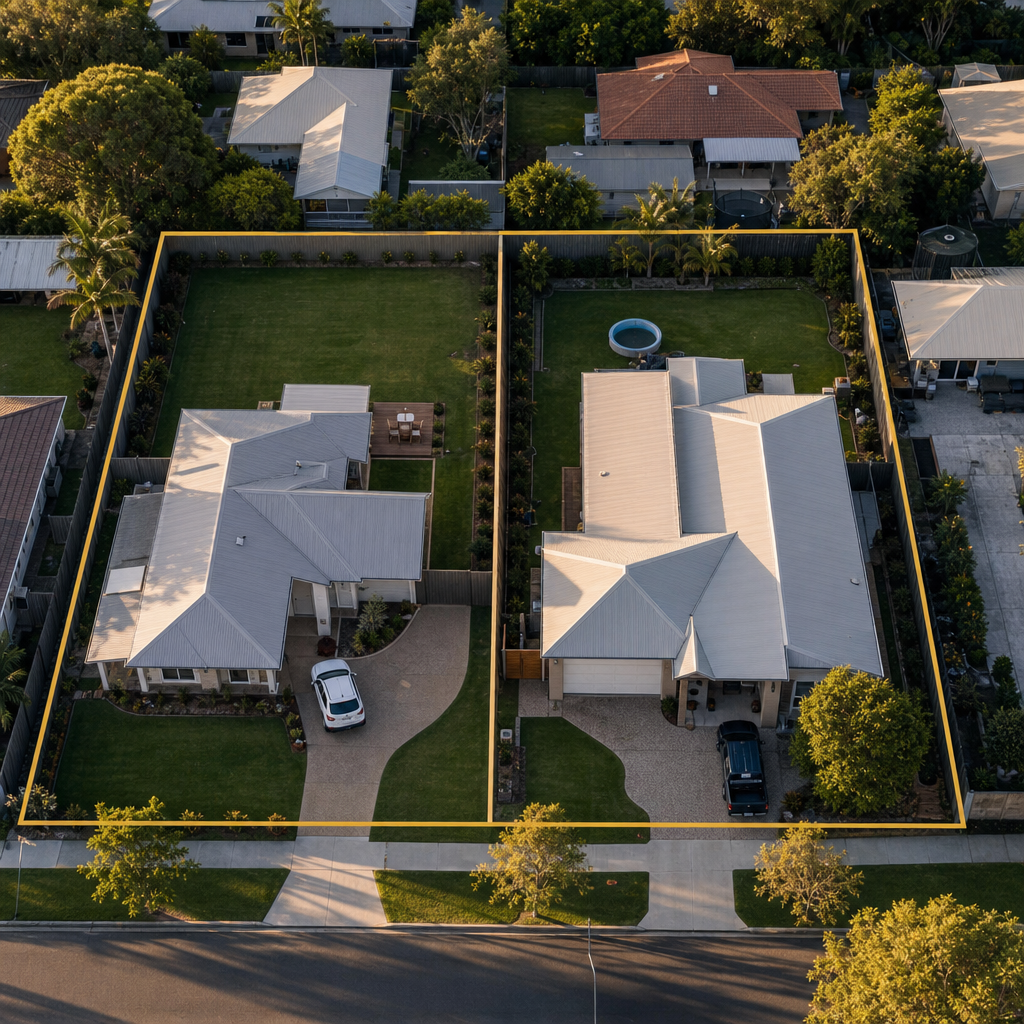
Unlocking the hidden value of an existing property is one of the most reliable ways to generate significant equity in the Australian real estate market. For homeowners and investors alike, understanding the subdivision process is the first step toward maximising your land footprint. If you are researching property subdivision costs australia to determine whether your block is viable, you need precise numbers, strict planning, and a clear understanding of local council requirements.
At George & Sons, we know that a successful subdivision is not a guessing game. It requires deep analysis of zoning codes, infrastructure capacities, and realistic resale values. Too many property owners jump into the planning phase without a firm grasp of the cost to subdivide a block, only to realise late in the programme that their margins have evaporated due to hidden utility connection fees or mandatory council contributions.
In this guide, we are going to break down exactly how to subdivide property in Australia. We will analyse the strict minimum lot size requirements, map out the subdivision process australia step by step, and provide a transparent breakdown of the fees you will encounter. Whether you plan to build a secondary dwelling, sell the vacant rear block, or develop the entire site, this guide provides the expert foundation you need.
Key Takeaways
- Minimum lot sizes are dictated by local council zoning, meaning you must verify your specific property code before drawing up plans.
- The total cost to subdivide a block typically ranges from $40,000 to $120,000, heavily influenced by site conditions and infrastructure requirements.
- The subdivision process in Australia takes between 6 to 12 months from the initial surveyor engagement to the final title registration.
- Headworks, utility connections, and statutory fees account for over 50 percent of the total subdivision expenses.
- Subdivision profit margins remain strong in high-demand suburbs, provided you accurately forecast the infrastructure upgrade costs.
Subdivision Costs and Timelines Summary
| Project Component | Estimated Cost Range (AUD) | Typical Timeframe | Key Dependencies |
|---|---|---|---|
| Preliminary Feasibility and Planning Report | $2,000 - $5,000 | 2-4 weeks | Site complexity, zoning overlays |
| Council Application and Statutory Fees | $15,000 - $30,000+ | 3-6 months | Council processing times, state contributions |
| Land Surveying Services | $5,000 - $15,000 | 3-6 weeks | Lot size, terrain, existing structures |
| Utility Connections (Water, Power, Sewer) | $15,000 - $50,000+ | 2-4 months | Proximity to main infrastructure |
| Total Investment | $40,000 - $120,000 | 6-12 months | Location, block size, council rules |
Council zoning and minimum lot size rules
Before you spend a single dollar on surveyors, you must determine if your land is legally eligible to be split. The most critical factor in the subdivision process australia relies on is the minimum lot size for subdivision dictated by your local council. Every local government area has a planning scheme that specifies exactly how small a newly created lot can be. This is entirely dependent on your property's zoning designation.
If your property is zoned Low Density Residential, the minimum lot size might be 400 square metres in a major Victorian or New South Wales growth corridor. In an established Queensland suburb, it might be 600 square metres. If your block is 800 square metres and the local minimum is 600 square metres, you cannot legally subdivide because both new lots must meet the minimum size requirement independently. However, if the minimum is 400 square metres, you have a highly viable subdivision opportunity.
To assess this properly, you need to obtain a Section 10.7 Planning Certificate in New South Wales, a Section 32 Vendor Statement in Victoria, or a Title and Planning Search in Queensland. These documents reveal the exact zoning of your property. Zoning also dictates setback rules, which means you have to ensure that any existing dwellings on the property will still comply with boundary setback requirements once the new lot line is drawn.
Furthermore, you must assess site constraints. A block might meet the size requirement but feature a severe slope, a recognised flood overlay, or significant native vegetation protected by local environmental laws. Any of these factors can trigger a knockback from council, regardless of the land size. The Australian Building Codes Board and local councils require strict adherence to these overlays.
Step-by-step subdivision process Australia
Understanding how to subdivide property requires following strict regulatory steps. Skipping a phase or attempting to expedite the process will result in costly delays. Here is the exact sequence you need to follow.
Phase 1: Feasibility and due diligence
You cannot rely on guesswork. The first step is hiring a licensed town planner or land surveyor to conduct a preliminary site assessment. They will measure the site, review the local environmental plan, and determine if your block meets the minimum lot size for subdivision. They will also identify any easements, covenants, or existing sewerage pipes running under the ground. If a main sewer line bisects your backyard, creating a new lot around it becomes substantially more complex and expensive.
Phase 2: Engaging a surveyor and creating the plan of subdivision
If the initial feasibility stacks up, you engage a registered land surveyor. The surveyor will draft a Plan of Subdivision. This plan outlines the proposed new boundaries, the dimensions of the newly created lot, and the location of existing dwellings relative to the new boundary lines. This document must be meticulously accurate because it forms the basis of your council application.
Phase 3: Council submission and the Development Application
Your surveyor or town planner will lodge the application with your local council. This is where the majority of the waiting occurs. Councils assess the application against their Local Environmental Plan and Development Control Plan. They will scrutinise the impact on local traffic, the provision of utilities, stormwater drainage, and the character of the local suburb. If your application requests a variation to the standard minimum lot size, you will need to provide strict planning justification.
Phase 4: Compliance conditions and certifications
Council rarely approves an application outright without conditions. If they grant consent, they will issue a list of conditions that must be satisfied before the new titles are issued. These conditions usually involve installing new stormwater drainage systems, upgrading nature strips, constructing new crossover access to the road, and connecting the new lot to main utilities.
Phase 5: Operational works and utility connections
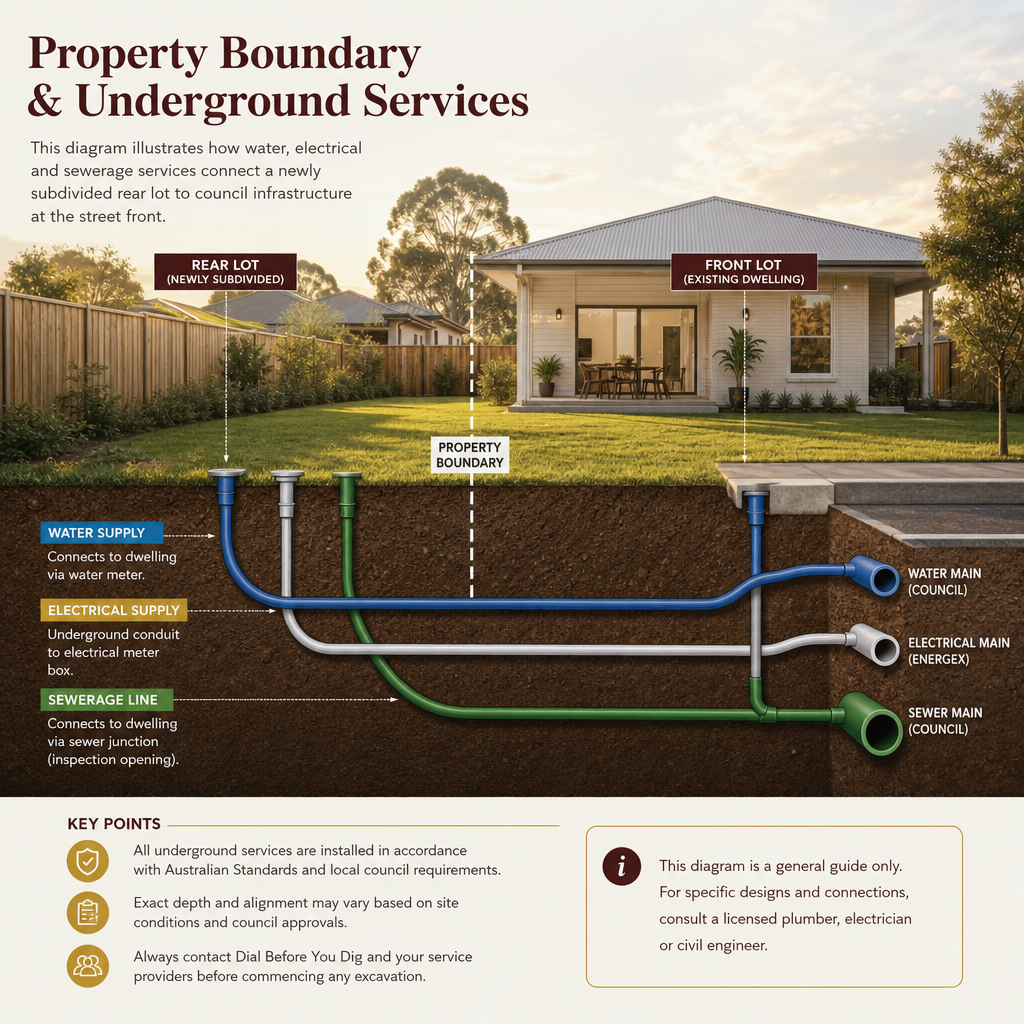
This is the most expensive stage of the physical works. You must engage contractors to install the infrastructure mandated by council. This involves digging trenches for new water mains, running underground electrical cables, and ensuring the new lot has independent access to the local sewerage system. Each utility provider, whether it is a state government entity or a private corporation, will charge connection fees and inspection costs.
Phase 6: Plan sealing and title registration
Once all conditions are met, your surveyor submits the final documentation to council for plan sealing. The council physically seals the plan of subdivision, confirming that all works are complete and compliant. The sealed plan is then lodged with the state land registry office, which issues the new Certificates of Title. At this exact moment, the subdivision is legally recognised.
Cost to subdivide a block: A transparent breakdown
To accurately calculate property subdivision costs australia, you must account for statutory fees, professional services, and physical infrastructure. Let us break down the cost to subdivide a block so you can forecast your budget accurately.
Professional fees
You cannot navigate this process alone. A licensed land surveyor will charge between $5,000 and $15,000 depending on the complexity of the site and the amount of field work required. A town planner will charge between $3,000 and $8,000 to manage the application and liaise with council on your behalf. If your site requires a geotechnical report due to soil reactivity, expect to pay an additional $1,500 to $3,000.
Council and statutory charges
Local councils levy substantial fees to process subdivision applications. These fees vary drastically depending on the municipality. A standard two-lot subdivision application might attract a base fee of $2,500, but complex applications requiring multiple reports can exceed $10,000 in council fees alone. Furthermore, many states impose infrastructure contribution charges. These are calculated based on the expected increased demand the new lot places on local services.
Utility and headworks charges
This is where budgets frequently blow out. Providing independent water, sewerage, electricity, and telecommunications to the newly created lot is expensive. If the main infrastructure is located directly adjacent to your property, connection costs might sit around $15,000. If the infrastructure requires upgrading, or if the main sewer line is located far down the street, you may be forced to pay for the extension of those assets. In some cases, utility connections alone can exceed $40,000.
Analysing subdivision profit margins
A subdivision only makes financial sense if the end value of the two newly created lots exceeds the cost of the subdivision process plus the value of the original block. This requires precise market analysis.
Consider a property purchased for $600,000 on an 800 square metre block in a middle-ring Australian suburb. The owner invests $80,000 to subdivide the rear block. Their total investment is $680,000, not including holding costs or capital gains tax implications.
If the original house, now sitting on a 400 square metre front block, is valued at $550,000, and the newly created 400 square metre rear block sells for $320,000, the total value of the assets is now $870,000. The gross profit margin on the subdivision is $190,000. This math works perfectly in a market with steady demand and strong land values.
Maximising land value before subdivision
To maximise your profit margins, you need an agency that understands the micro-economics of your specific suburb. I learned this firsthand back in Jan 2021 when I was referred in to give an appraisal for a developer who owned an apartment complex in Beenleigh. He was highly skeptical when we first met. He told me he was not sure our small family company could really do anything but to give it a go.
At the time, I was up against exceptional agents from large franchise agencies who were also pitching to sell these apartments. I won the contract by making sure I knew absolutely everything about the complex, the Body Corporate structure, and the local infrastructure. I walked every purchaser through the property personally and took a genuine interest in matching their specific needs to the right floorplan. Because the apartments were freshly built, they were fresh, clean and spacious, which made them highly desirable.
Once I sold the first and second apartments, the owner became much more confident and comfortable with our strategy. Five years on, we have sold 12 apartments in that complex and we are still going strong. We have also become very good friends through the process. That experience proved that whether you are subdividing a block of land to sell off the rear, or trying to market a complex development, genuine expertise and granular market knowledge will always maximise your final sale price. Small, focused agencies simply work harder to get the deal done.
If you want to understand the exact end-value of a proposed subdivision before you start, contact our team. We provide realistic, data-backed appraisals to ensure your project is viable.
Case studies: Real subdivision costs and final sale profits
Case study 1: Post-war home in a Queensland middle suburb
An investor purchased a 810 square metre block with an older post-war home in a suburb 20 kilometres from the Brisbane central business district. The local council minimum lot size was 400 square metres. The strategy was to subdivide the rear yard and sell it as a vacant block to a builder.
The investor engaged a surveyor and town planner for $9,000. Council application and statutory fees totalled $14,500. Because the main sewer line ran directly along the rear boundary, utility connections were straightforward, costing $18,000. Additional earthworks, landscaping of the new boundary, and a new crossover for the rear block added another $8,500. The total cost to subdivide a block was $50,000.
The rear 405 square metre block sold for $340,000. The original house on the front 405 square metre block retained its value at $520,000. The gross profit on the sale of the rear block was $290,000, providing an exceptional return on the capital invested in the subdivision process.
Case study 2: Strata subdivision in a regional Victorian centre
Two investors owned a large 1,200 square metre corner block in a regional Victorian centre, featuring a primary dwelling at the front and a newly built dual occupancy at the rear. They needed to create two separate titles to sell the properties individually.
Because both dwellings were already constructed and connected to utilities, this was primarily an administrative and legal process. However, they needed to upgrade the rear driveway to meet council traffic and safety standards. The council fees, planning permits, and legal fees to create the two titles totalled $28,000. Driveway upgrades and minor landscaping cost an additional $12,000. The total project cost was $40,000.
By separating the titles, the investors were able to sell the rear property as a standalone dwelling. Prior to subdivision, the combined property was valued at $680,000. Post-subdivision, the front dwelling sold for $440,000 and the rear dwelling sold for $410,000. The subdivision process generated a total property value of $850,000, unlocking a profit margin of $130,000 purely through administrative and minor physical works.
If you are looking to sell a newly created lot or a newly developed property, browse our real estate services to see how we position properties for maximum market exposure.
References
- Australian Bureau of Statistics. "Residential Property Price Indexes". Available at: https://www.abs.gov.au/statistics/economy/price-indexes-and-inflation/residential-property-price-indexes-eight-capital-cities
- Australian Competition and Consumer Commission. "Consumer guarantees for real estate and building services". Available at: https://www.accc.gov.au/consumers/buying-products-and-services/buying-services/consumer-guarantees-for-real-estate-and-building-services
- NSW Government Planning Portal. "Subdivision". Available at: https://www.planningportal.nsw.gov.au/subdivision
- Queensland Government. "Subdividing land". Available at: https://www.qld.gov.au/housing/buying-owning-home/subdividing-land
Get tailored guidance
Send us your question and we will reply within one business day.
Send us the article topic, suburb, or property goal you want help with and we will reply within one business day.
Send my questionFAQ
How long does a subdivision take in Australia?
A standard two-lot subdivision typically takes between 6 and 12 months. This timeframe covers the initial planning phase, the council assessment period, the physical installation of utilities, and the final title registration through the state land registry. Complex subdivisions requiring zoning changes or extensive infrastructure upgrades can take 18 months or longer.
What is the absolute minimum lot size for subdivision?
The minimum lot size is dictated entirely by your local council's planning scheme. In some high-density growth corridors, the minimum might be 300 square metres. In established, low-density suburbs, it is frequently 600 or 800 square metres. You must check your specific zoning code to determine the minimum size applicable to your block.
Can I subdivide if I have an existing mortgage?
Yes, but you must obtain written consent from your mortgage lender. The bank holds the title to your property as security. When you create a new title, the bank needs to assess how their security is affected and agree to release the newly created lot from their primary mortgage, or register a new caveat over both new titles.
Do I have to pay capital gains tax on a subdivided block?
If you subdivide a block and sell the newly created lot, you will likely be liable for capital gains tax. However, if the original block is your primary residence and you sell the rear block, specific calculations apply regarding the cost base of the property and the date the land ceased to be used solely as your main residence. You must consult a registered tax accountant to calculate your exact liability.
How do I know if my property has easements or restrictions?
You need to commission a title search through your solicitor or conveyancer. The Certificate of Title will list any easements, covenants, or restrictions on the use of the land. A registered surveyor can also identify the exact physical location of these easements, such as underground power lines or drainage pipes, during the preliminary site assessment.
Is subdividing property worth it?
Subdivision is highly profitable when the end value of the newly created lots significantly exceeds the cost to subdivide, develop, and market the property. If your property is in a high-demand area with strong land values, the profit margins can be substantial. However, if utility connection costs are exceptionally high due to difficult terrain, the financial viability drops quickly.
What happens if council rejects my subdivision application?
If council rejects your application, you can either amend the plans to address their specific concerns and resubmit, or you can appeal the decision at a state tribunal or court. Engaging an experienced town planner before you submit your application is the best way to prevent a rejection.
Margy George
Property and finance guidance from the George & Sons team.
Keep reading
property management fees Australia
Property Management Fees in Australia: A Comprehensive Guide for Landlords
19 min read
real estate market trends Australia
35 Australian Real Estate Market Statistics for 2026
20 min read
rent vesting strategy australia
Rent-Vesting in Australia: The Strategic Property Investor's Guide for 2026
18 min read
Ready for clarity?
Get a calm, practical plan for your next property move.
Buying, selling, finance, or renting - tell us what you are working on and we will come back with the most useful next step.
Tell us what you need help with.
Send a quick enquiry and the team will come back with a clear next step.
Request a callback